How can architecture – vast, spatial, and designed to be inhabited – be meaningfully experienced within the confines of an exhibition? This summer, the Museum of Art Pudong offers its own answer through a major exhibition dedicated to the museum's architect, Jean Nouvel.
The French architect's first solo exhibition explores his vision of site-specific architecture alongside his longstanding engagement with furniture design. Curated by Nouvel himself, the galleries transform into a sensorial journey through the architect's creative universe. Each display offers a tangible encounter with architecture on a monumental scale, while visitors continually oscillate between drawings, models, conceptual ideas, and the museum building itself, designed by Nouvel five years ago.
Upon entry, the first hall is a walkable archive of Nouvel’s designs of various art museums and institutions across the globe, including the Fondation Cartier pour l’art contemporain and the National Museum of Qatar. Separated by gallery walls full of designs and simulations are individual models of the buildings – beyond their white silhouettes under carefully directed spotlights rises Shanghai's skyline, its illuminated towers forming a dramatic backdrop. It is in this moment – when the eye shifts from miniature architecture to the living city beyond—that one truly grasps how architecture comes into being within everyday life.
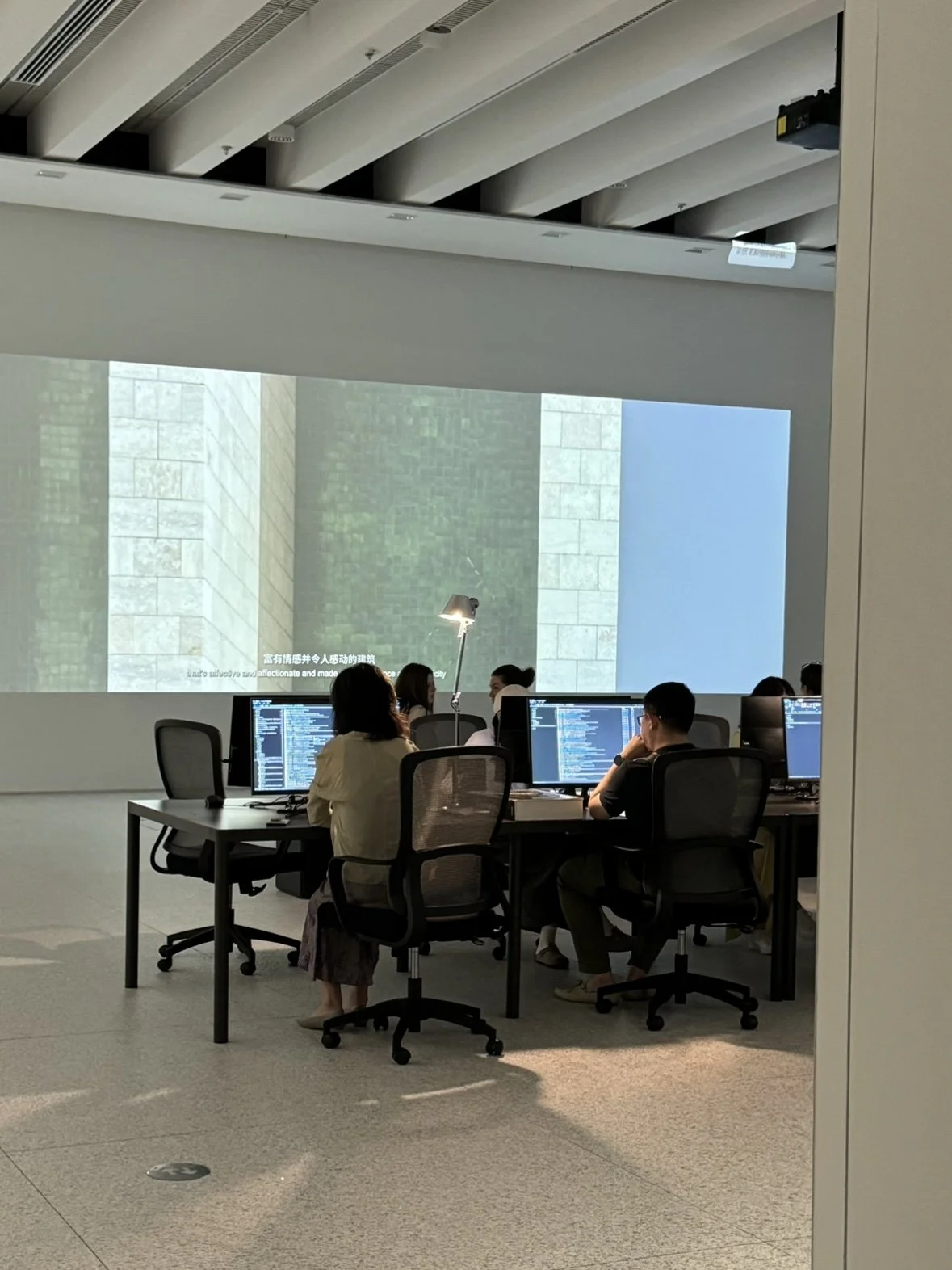
In the gallery devoted to Nouvel's furniture designs, visitors step into a reconstructed version of the Office of Ateliers Jean Nouvel in Paris. Two rows of desks, computers, and office chairs invite visitors to sit down and browse digital folders filled with images, drawings, and information relating to the architect's furniture projects. At first, it feels unusual that the furniture itself is absent. Yet this deliberate omission shifts attention away from the finished object towards the creative process behind it. Within this reconstructed workplace – and with subtle echoes of MAP's own location in Lujiazui, Shanghai's financial district – visitors are encouraged to imagine themselves as members of Nouvel's studio. Creativity here is presented not as a final product, but as an ongoing act of experimentation.
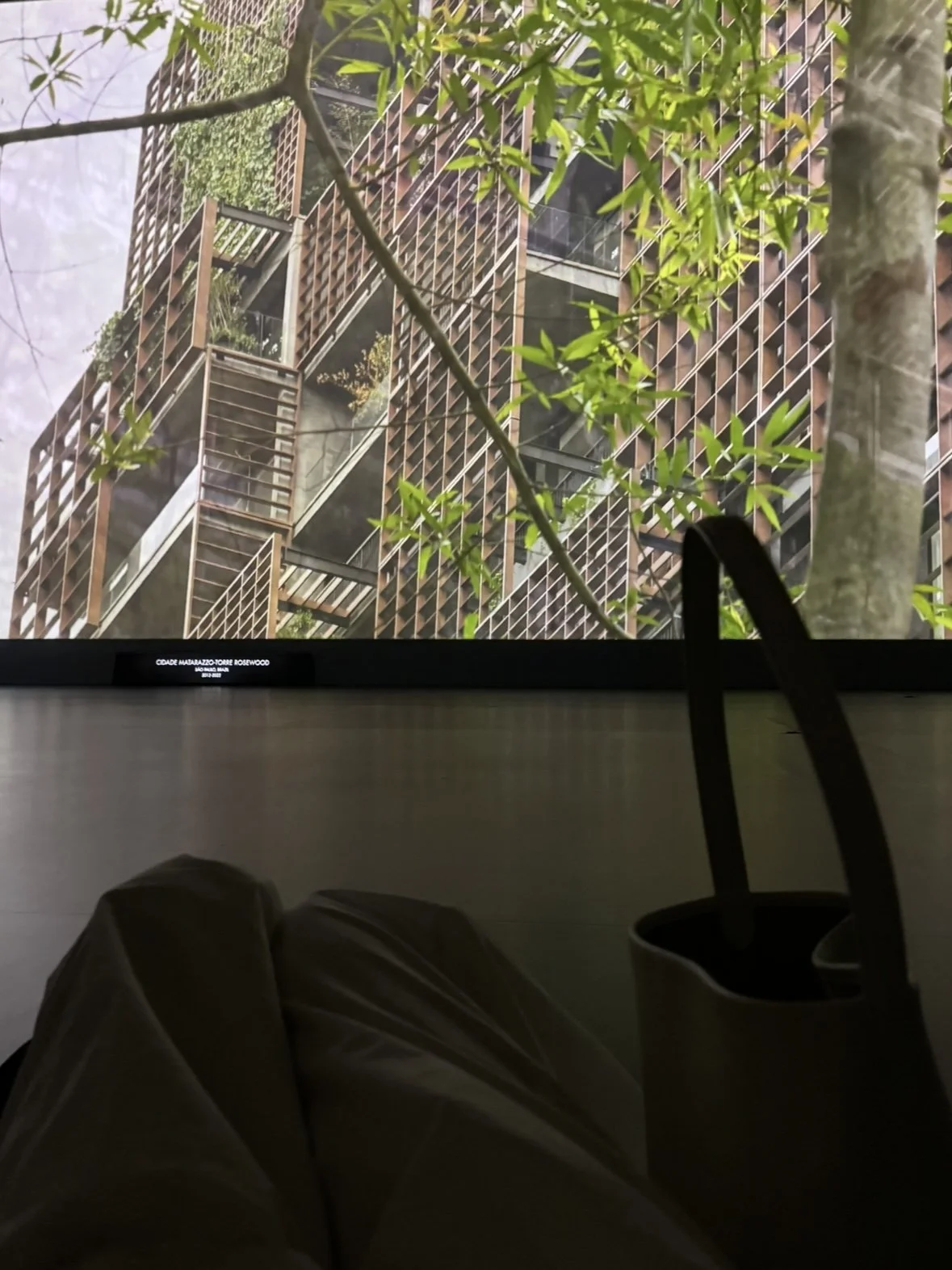
Another memorable experience of the exhibition is the final hall transformed into an immersive cinematic environment – the colossal space is surrounded by three screens that embrace a selection of soft sofas and cushions scattered around in the dark. Visitors may sit, recline, or stand as Nouvel's selected iconic projects unfold across the screens from various angles. Returning to the question posed at the beginning – how can architecture be experienced within an exhibition? – this room perhaps offers the clearest response. From conception plans to close-up details of the buildings, each flowing line and curve of form and each glimmer of metallic edges become unmissable. The darkness of the room guides visual attention to the screens, while the cinematic experience enables a curiosity that sustains audience engagement.
Rather than following the familiar rhythm of a museum exhibition, each gallery at MAP constructs its own microcosm – archive, office, cinema – each revealing a different facet of Nouvel's creative world. To traverse these spaces is to participate in their making. Models become buildings, drawings become environments, and ideas gradually transform into lived experience. The exhibition reminds us that architecture is never a static object, but an evolving dialogue between imagination, material, and the people who inhabit it.
